
Ever find yourself wondering, “Why do I get distracted so easily?” The answer is both simple and a little unsettling: our world is practically engineered to hijack your focus. Feeling scattered isn’t a personal flaw—it’s a completely normal reaction to an environment that constantly bombards us with digital pings and plays on our brain’s natural craving for something new.
The Constant Battle for Your Attention

It helps to think of your attention like a limited budget. Every notification, every “quick question” from a coworker, every unexpected email is a small withdrawal. One or two don’t seem like much, but they add up fast. Before you know it, you’re mentally overdrawn and can’t afford to pay attention to the things that actually matter.
This isn’t happening by chance; it’s by design. The people who build our apps and social media feeds are masters of neuropsychology. They know all about the brain’s “novelty bias”—our deep-seated instinct to pay attention to new information over the task we’re already doing. That ancient survival trait that helped our ancestors spot a predator in the bushes is now being targeted by algorithms that keep us scrolling, clicking, and refreshing.
You Are Not Alone in This Struggle
If you feel like you’re being pulled in a dozen different directions at once, welcome to the club. This constant flood of information has created a state of perpetual interruption, making deep, focused work feel like a luxury few can afford.
Just look at the modern workplace. Studies show the average office worker checks their email 36 times an hour. What’s worse, it takes an average of 16 minutes to fully get back on track after each interruption. For Millennials and Gen Z, 36% spend more than two hours a day on their smartphones during work hours. That adds up to a staggering 10 hours of lost time every single week. If you’re curious, you can explore more workplace distraction statistics to see just how widespread this is.
This non-stop jumping between tasks is known as “context switching,” and it’s incredibly draining. It creates a kind of mental friction that grinds down your cognitive energy, leaving you even more vulnerable to the next shiny object that pops up.
To give you a clearer picture, let’s break down the most common reasons your focus feels so fragile.
Common Reasons You Get Distracted Easily
Here’s a quick look at the primary internal and external factors that constantly pull at your focus.
| Category | Common Examples | Impact on Focus |
|---|---|---|
| Biological | Poor sleep, nutrient deficiencies, underlying conditions like ADHD, stress, and anxiety. | Reduces cognitive stamina, impairs memory, and makes it harder to regulate impulses. |
| Environmental | A noisy office, a cluttered desk, uncomfortable seating, or frequent interruptions from family or colleagues. | Creates sensory overload and forces your brain to constantly filter out irrelevant information. |
| Technological | Smartphone notifications, social media feeds, constant emails, and the “always-on” expectation. | Exploits the brain’s reward system with small dopamine hits, training you to seek constant stimulation. |
| Habitual | Procrastination cycles, multitasking out of habit, and checking your phone without thinking. | Creates ingrained behavioral loops that automatically pull you away from deep work. |
Understanding these forces is the first, most important step. It’s not that you’re “bad at focusing.” You’re simply up against a powerful combination of internal wiring and external pressures. Once you start recognizing what’s really going on, you can begin to build a system to protect your most valuable asset: your attention.
Why Your Brain Craves Distraction
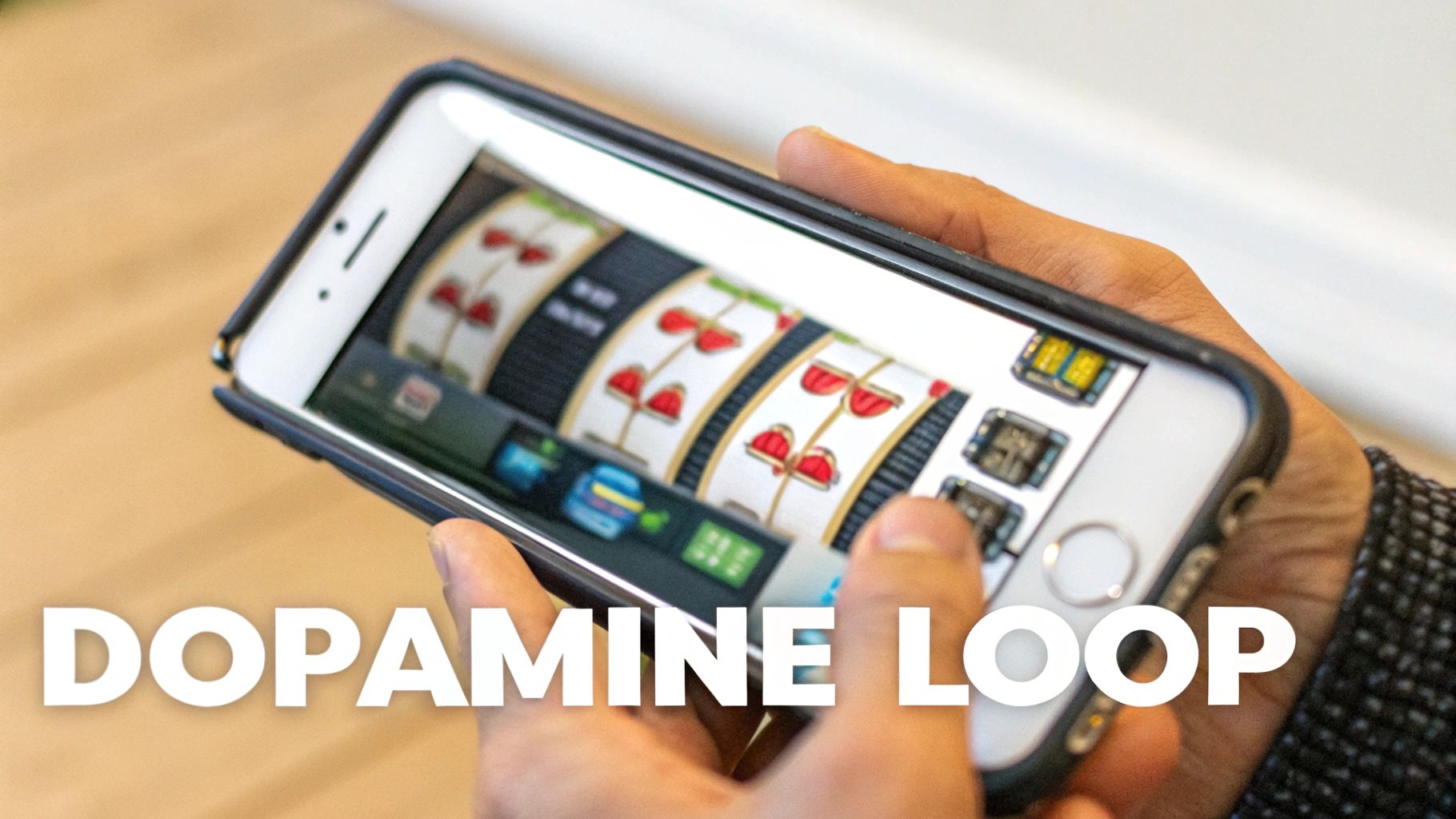
If you feel like you’re constantly fighting a losing battle with distraction, you’re not just imagining it. The truth is, it goes much deeper than willpower. Your brain isn’t just passively letting interruptions happen—it’s often actively looking for them. This pull comes from two powerful forces baked into our biology: our built-in “novelty bias” and the constant chase for a little chemical reward called dopamine.
The novelty bias is an old-school survival tool. For our ancestors, noticing a snapped twig or a new shape on the horizon could mean the difference between finding food and becoming it. Fast forward to today, and that same instinct is what makes you glance at every notification and compulsively check your email. Your brain is simply hardwired to prioritize “what’s new” over “what you’re doing.”
And our modern digital world has put this ancient instinct into overdrive.
The Dopamine Slot Machine in Your Pocket
Every time you get a notification, scroll your feed, or click an interesting link, your brain gets a tiny hit of dopamine. While people call it the “feel-good” chemical, it’s more about anticipation and wanting. It’s the chemical that says, “Do that again!”
Think of your phone as a slot machine you carry in your pocket. You pull the lever (refresh the page) with no idea what you’ll get. Most pulls are duds, but every so often you hit a little jackpot—a text from a friend, a like on your photo, a hilarious video. This unpredictable reward schedule is incredibly addictive. It creates a powerful feedback loop that trains your brain to constantly seek out these quick, easy dopamine fixes.
This is exactly why you find yourself grabbing your phone without even consciously deciding to. Your brain has learned that this little device is a fast, reliable source of a tiny mood boost, which makes it an incredibly tough habit to ignore when a more difficult task is in front of you.
When Your Cognitive Fuel Tank Is Low
Your ability to push back against these urges is directly tied to your physical and mental state. Just like a car won’t run without gas, your brain can’t stay focused when its resources are depleted. Several key factors can drain your cognitive fuel and leave you vulnerable to every little distraction:
- Poor Sleep: Skimping on quality sleep directly messes with your prefrontal cortex. This is your brain’s CEO, in charge of things like planning, making good decisions, and resisting impulses.
- High Stress: When you’re constantly stressed, your body is flooded with cortisol, a hormone that kicks your brain into “fight or flight” mode. This makes you jumpy and reactive—the complete opposite of the calm state needed for deep focus.
- Bad Fuel: Your brain is an energy hog. A diet full of sugary foods that lead to energy crashes or one that lacks essential nutrients is like putting cheap gas in a high-performance engine. It just won’t run well.
Seeing the problem through this biological lens is a game-changer. It’s not a personal failure of willpower. It’s about creating the right conditions for your brain to thrive. Taming distraction isn’t about gritting your teeth and forcing it; it’s about giving your brain the support it needs to make focus feel natural again.
It’s easy to blame yourself when your focus shatters, but often, the real culprit is your environment. Our brains are hardwired to notice new things, and our modern surroundings are a minefield of novelty. If you’re constantly wondering why you get distracted so easily, it’s time to look at the spaces where you live and work.
Think about the classic open-plan office. It was meant to spark collaboration, but it’s a disaster for deep, focused work. Every conversation, every person walking past your desk, every phone ringing—it’s all a tiny tug on your attention. You end up in a state of high alert, waiting for the next interruption instead of truly sinking into your tasks.
The Digital Casino in Your Pocket
Your digital world is even more aggressive. Social media feeds, news sites, and apps are built like slot machines, operating on a principle called “variable rewards.” You pull to refresh, not knowing if you’ll find something amazing or just more of the same. It’s that very unpredictability that keeps you hooked, creating a compulsive loop that’s incredibly difficult to escape.
This isn’t an accident; it’s by design. The goal is to keep you engaged, not to help you be productive. Every notification is a carefully engineered interruption meant to pull you back in. Fighting this takes more than sheer willpower—it requires deliberately shaping your digital space. For Mac users, using the right tools is key, which is why we put together a guide on the best website blocker for Mac.
The constant pinging and task-juggling come at a steep price. This rapid shifting, known as “context switching,” isn’t just annoying—it’s a huge productivity killer. It forces your brain to reload information repeatedly, leading to mental fatigue and sloppy work.
The High Cost of Constant Interruption
The financial fallout from these environmental distractions is staggering. A whopping 68% of people feel their workday is riddled with too many interruptions, with meetings and information overload leading the charge. This isn’t just a feeling; it drains real resources.
McKinsey estimates that all this context-switching from pings and other demands can devour 20-30% of an employee’s productive time. Zoom out, and you’ll find that distracted employees cost businesses an incredible $8.8 trillion globally in lost productivity each year, according to these workplace distraction findings on Clockify.me.
Your environment is constantly sending signals to your brain about what to prioritize. A cluttered desk and an overflowing inbox scream chaos, making it nearly impossible to focus on one important thing. To get your focus back, you have to start by seeing these hidden enemies for what they are and then redesign a space that works for you, not against you.
How to Pinpoint Your Personal Distraction Triggers
If you want to figure out why you get distracted so easily, you need to start by playing detective with your own habits. “Feeling unfocused” is a vague problem, but data is specific. The most important thing you can do is move from that general sense of being scattered to having clear evidence of what’s actually pulling you away.
The easiest place to begin is with a Distraction Journal. For just a day or two, keep a notebook or a simple document open. Every single time you feel your mind wander or catch yourself switching tasks, just note it down. The point here isn’t to judge yourself—it’s just to observe.
The Power of Manual Tracking
When you physically write down what’s happening, you create a powerful feedback loop that connects your actions to your awareness. A quick entry might look something like this:
- Time: 2:15 PM
- What I was doing: Trying to write that project proposal.
- What distracted me: A Twitter notification popped up, and I opened it.
- How I was feeling: Bored with the proposal, curious about the notification.
After just a couple of days of this, you’ll start to see patterns jump out at you. Maybe your focus always nosedives right after lunch. Or perhaps one specific app is your personal kryptonite. This simple log helps you connect the dots between your environment, your emotional state, and what you do next. If you want to build a more structured habit of self-reflection, you can learn how to maintain a daily work journal.
Uncovering the Truth with Automatic Tracking
Manual journaling is a fantastic starting point, but it has one big blind spot: you can only write down the distractions you notice. What about the five minutes you just lost scrolling a news site without even thinking about it? This is where an automatic time-tracking tool like Chronoid can give you an unfiltered look at where your time really goes.
Think about how easily your environment can sabotage your focus. A single notification can trigger a whole chain reaction that leads to cognitive overload, as this chart shows.
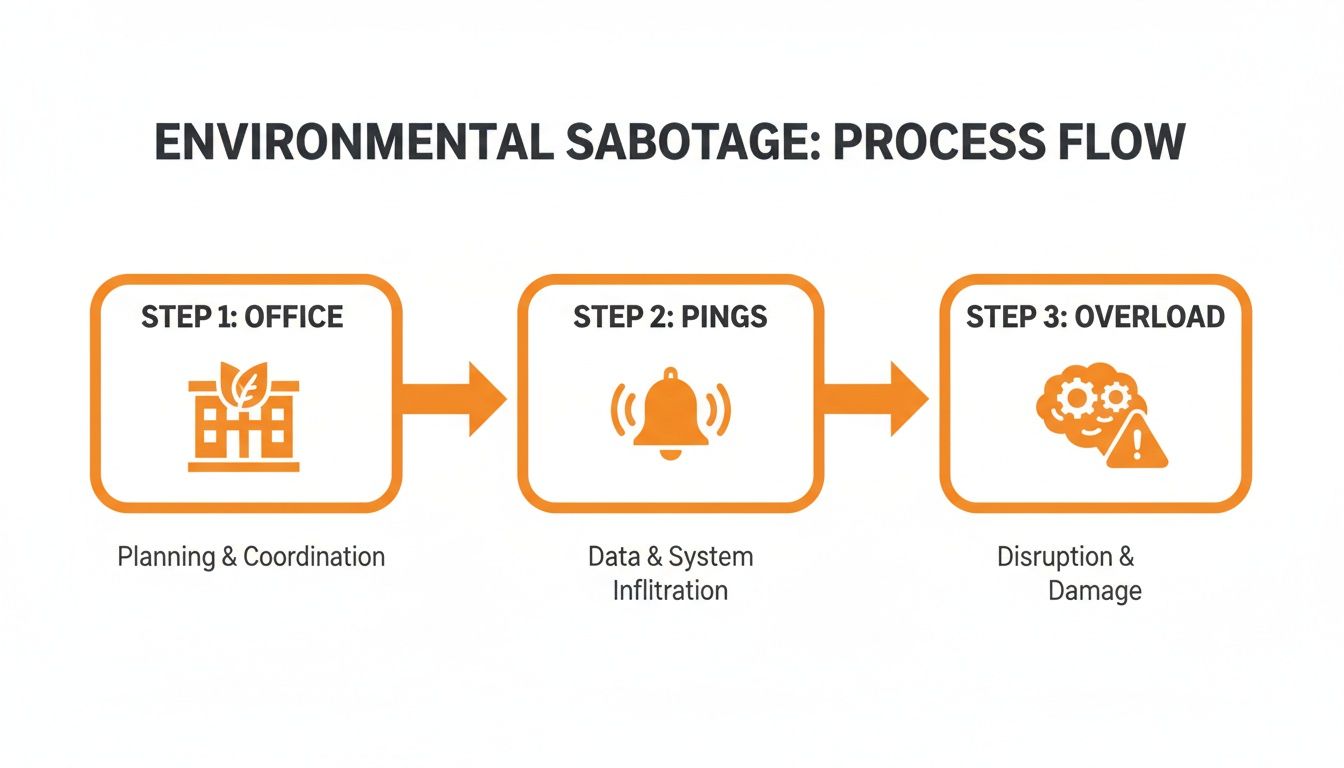
As you can see, those little external pings are often just the first domino to fall in a process that ends with you feeling mentally exhausted and completely off-track.
By running silently in the background, these apps capture every minute, revealing the unfiltered truth about where your attention actually goes. The resulting data can be shocking but is incredibly empowering.
Of course, not all distractions are external. Internal mental noise, like random worries or ideas, can be just as disruptive. Learning some strategies for dealing with intrusive thoughts can help you manage these mental interruptions.
By putting it all together—the self-awareness from a journal and the hard data from an app—you get a complete picture of your own unique distraction profile. That clarity is exactly what you need to finally start making real changes.
Practical Strategies to Rebuild Your Focus Muscle

Knowing what distracts you is one thing, but doing something about it is where the real work begins. Think of your ability to concentrate as a muscle. If you don’t use it, it gets weak. Rebuilding it takes consistent, intentional effort—not a massive, one-time overhaul.
The best approach is to tackle this from a few different angles: tweaking your environment, managing your own mind, and building better work habits. By shoring up your defenses in each of these areas, you start to create a powerful system that protects your most valuable asset: your attention.
Design a Focus-Friendly Environment
Your physical and digital spaces are constantly sending signals to your brain. A messy desk in a noisy room practically begs your mind to wander. A clean, quiet space, on the other hand, promotes clarity. The goal is to make focusing the easiest and most obvious thing to do.
Start by carving out a dedicated workspace. It doesn’t have to be a separate room—even a specific corner of your kitchen table can work. This creates a physical boundary that tells your brain, “When I’m here, it’s time to work.”
Just as important is taming your digital world. Use app blockers or website filters to create “no-fly zones” during your focus time. This isn’t about admitting you have no willpower; it’s about being smart and removing the temptation before it even has a chance to derail you.
Master Your Internal State
Let’s be honest, not all distractions come from the outside. Our own thoughts, feelings, and energy levels are often the biggest culprits. Getting a handle on your internal state means learning to quiet that mental chatter, or at least turn down the volume.
One of the most effective ways to do this is with the Pomodoro Technique. It’s brilliantly simple: work in a focused 25-minute sprint, then take a 5-minute break. This method trains your brain to hold its attention in manageable chunks, building your mental endurance over time without causing burnout.
Another powerful tool is mindfulness. You don’t need to become a meditation guru. Just taking a few minutes to focus on your breath can calm your nervous system and pull your attention back to the present. It teaches you to notice distracting thoughts as they drift by, without feeling the need to chase after them.
By practicing techniques like these, you’re not just fighting distraction in the moment—you’re fundamentally rewiring your brain’s response to it. You learn to be the one in control, not your fleeting impulses.
Build Sustainable Habits for Deep Work
Ultimately, real, lasting change comes from habits that support focus automatically. This is all about being intentional with how you structure your day and protect your energy.
A game-changing habit is to schedule “deep work” blocks directly into your calendar. Treat these appointments with the same respect you’d give to a meeting with your boss—they are non-negotiable. During this time, every single notification gets turned off, and you let your team know you’re off-limits.
Finally, create a shutdown ritual to mark the end of your workday. This could be as simple as reviewing what you accomplished, writing down your top three priorities for tomorrow, and tidying your desk. This routine signals to your brain that the workday is over, helping you truly disconnect and stop work from creeping into your personal time.
For an even deeper dive, our guide on ways to improve focus and concentration is packed with more actionable tips.
To help you get started, here’s a look at a few popular techniques.
Comparing Popular Focus Techniques
Choosing the right method often depends on the type of work you do and your personal style. This table breaks down a few common approaches.
| Technique | Best For | Implementation Difficulty |
|---|---|---|
| The Pomodoro Technique | Breaking down large tasks and preventing burnout | Easy |
| Deep Work Blocks | Complex projects requiring long periods of uninterrupted thought | Medium |
| Time Blocking | Structuring an entire day with specific tasks assigned to time slots | Medium |
| The 2-Minute Rule | Overcoming procrastination on small, quick tasks | Easy |
| Mindfulness/Meditation | Reducing internal chatter and improving overall presence | Easy to start, hard to master |
No single technique is a silver bullet, but experimenting with them will show you what works best for your brain. To really sharpen your mental clarity, check out these 10 practical ways to increase focus and concentration. Even just picking one or two to try this week can make a huge difference.
Knowing When to Seek Professional Guidance
While sorting out your habits and environment can be a game-changer, sometimes that nagging feeling of “why am I so easily distracted?” points to something deeper than just a chaotic desk or a bad night’s sleep. It’s crucial to know when your struggles with focus might be a sign of an underlying condition like Attention-Deficit/Hyperactivity Disorder (ADHD).
Everyone gets distracted, especially when we’re stressed or exhausted. But the real question is about persistence and impact. Is your struggle with focus a lifelong pattern, not just a recent problem? Does it consistently torpedo your performance at work, strain your relationships, and damage your overall quality of life?
If those questions hit a little too close to home, it might be time for a different perspective.
Distraction vs. a Disorder
Think about it this way: for most people, distraction is situational. It gets worse in a loud coffee shop or when a stressful deadline is breathing down their neck.
But for someone with a condition like ADHD, the fight for focus is constant and internal. It’s there even when the environment is perfectly quiet and calm.
The question shifts from, “What’s distracting me right now?” to “Why can’t my brain just filter things out the way other people seem to?”
This internal, persistent battle is a strong signal that it might be time to talk to a professional.
If this sounds familiar, it’s not a personal failure. It’s simply a cue to get more information. A conversation with a doctor or a mental health professional can lead to a proper evaluation, helping you understand what’s really going on and ruling out other possibilities.
They can offer strategies that go far beyond general advice, giving you the specific support you need to truly thrive.
Of course. Here is the rewritten section, designed to sound completely human-written and natural.
Your Focus Questions, Answered
If you’ve ever asked yourself, “Why can’t I just focus?”, you’re in good company. Trying to sharpen your attention often brings up more questions than answers. Let’s tackle some of the most common ones that I hear all the time.
Is Getting Distracted Easily a Sign of ADHD?
This is a big one. While getting sidetracked easily is a well-known sign of ADHD, it’s not a diagnosis in itself. Think of it this way: a cough can be a sign of a cold, but it can also be allergies or something else entirely. The same goes for distraction.
Chronic stress, not getting enough quality sleep, or even just working in a chaotic space can all mimic the symptoms of ADHD. The real question to ask is about the pattern. Has this been a struggle your whole life? Does it consistently cause major issues at work, at home, and in your relationships? If your difficulty with focus feels like a deep-seated, lifelong challenge rather than a recent problem, it’s worth talking to a doctor. They can help you get a real evaluation and find the right path forward.
Can You Actually Train Your Brain to Be Less Distracted?
Yes, you absolutely can. Your brain is not fixed; it’s constantly adapting based on what you do. This is a concept called neuroplasticity, and it’s your best friend when it comes to building better focus.
Think of it like building muscle. You wouldn’t expect to lift a heavy weight without training, and your attention works the same way. Every time you practice mindfulness or use a structured method like the Pomodoro Technique, you’re essentially doing a “rep” for your brain’s focus muscle.
By consistently carving out time for deep work and actively shutting down interruptions, you’re teaching your brain how to stay on task. It’s a skill, and like any skill, it gets stronger with deliberate practice.
How Can Technology Help Fight Distractions?
I know, it sounds like a paradox. How can the source of so many of our distractions also be the solution? It all comes down to using it intentionally instead of letting it use you.
- Set Up Digital Guardrails: Use app and website blockers to create sacred, distraction-free zones during your day. No more mindless scrolling when you’re on a deadline.
- Curate Your Soundscape: A good pair of noise-canceling headphones or an app that plays focus-enhancing sounds can be a game-changer for tuning out a noisy environment.
- See the Real Picture: This is where tools like automatic time trackers come in. They give you the honest, unfiltered truth about where your minutes and hours are really going. That data is often the wake-up call we need to make a change.
When you use technology strategically, it stops being the enemy and becomes one of your best allies in the fight for focus.
Ready to stop guessing and start understanding your personal distraction patterns? Chronoid automatically tracks your activity on your Mac to show you exactly where your time goes. Use its AI-powered insights and built-in focus tools to finally take back control of your attention. Start your free trial at https://www.chronoid.app.